
En
search
ACE
Get the latest information on the industry.
The Role of Small-Form-Factor FPGAs in the Next Generation of Point-of-Care Diagnostic Devices
As healthcare moves toward portable, intelligent, and connected solutions, point-of-care diagnostic devices require higher computing performance within smaller form factors. Small-Form-Factor FPGAs provide flexible hardware acceleration, real-time data processing, and low-power operation, making them an important technology for the next generation of medical devices.

09/11/2026

View

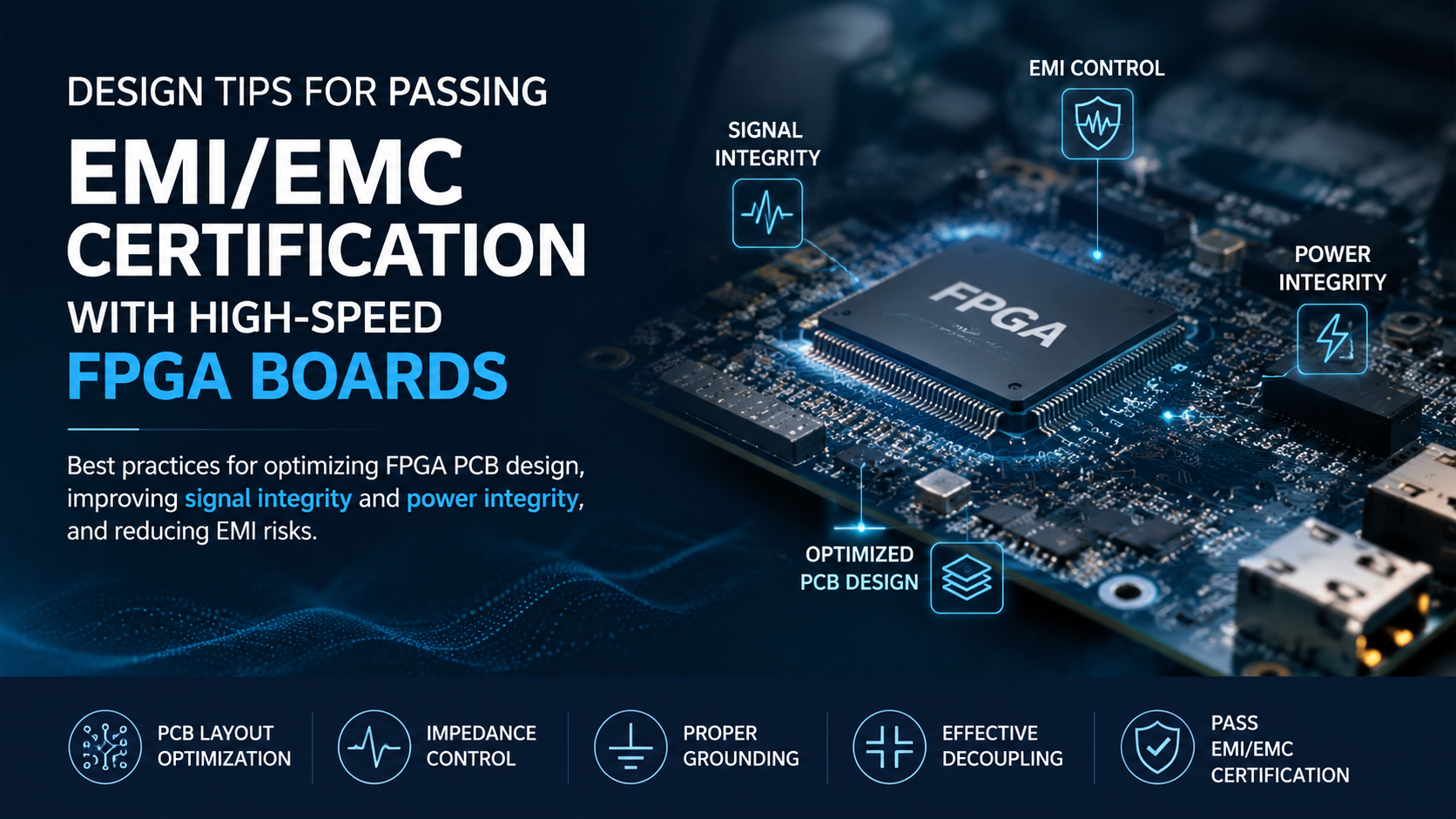
Design Tips for Passing EMI/EMC Certification with High-Speed FPGA Boards
As FPGA performance continues to increase, high-speed FPGA boards face greater challenges in electromagnetic interference (EMI) control and electromagnetic compatibility (EMC) compliance. This article introduces key design techniques for passing EMI/EMC certification, including FPGA PCB design optimization, signal integrity improvement, power integrity management, and high-speed interface design strategies.

09/04/2026

View

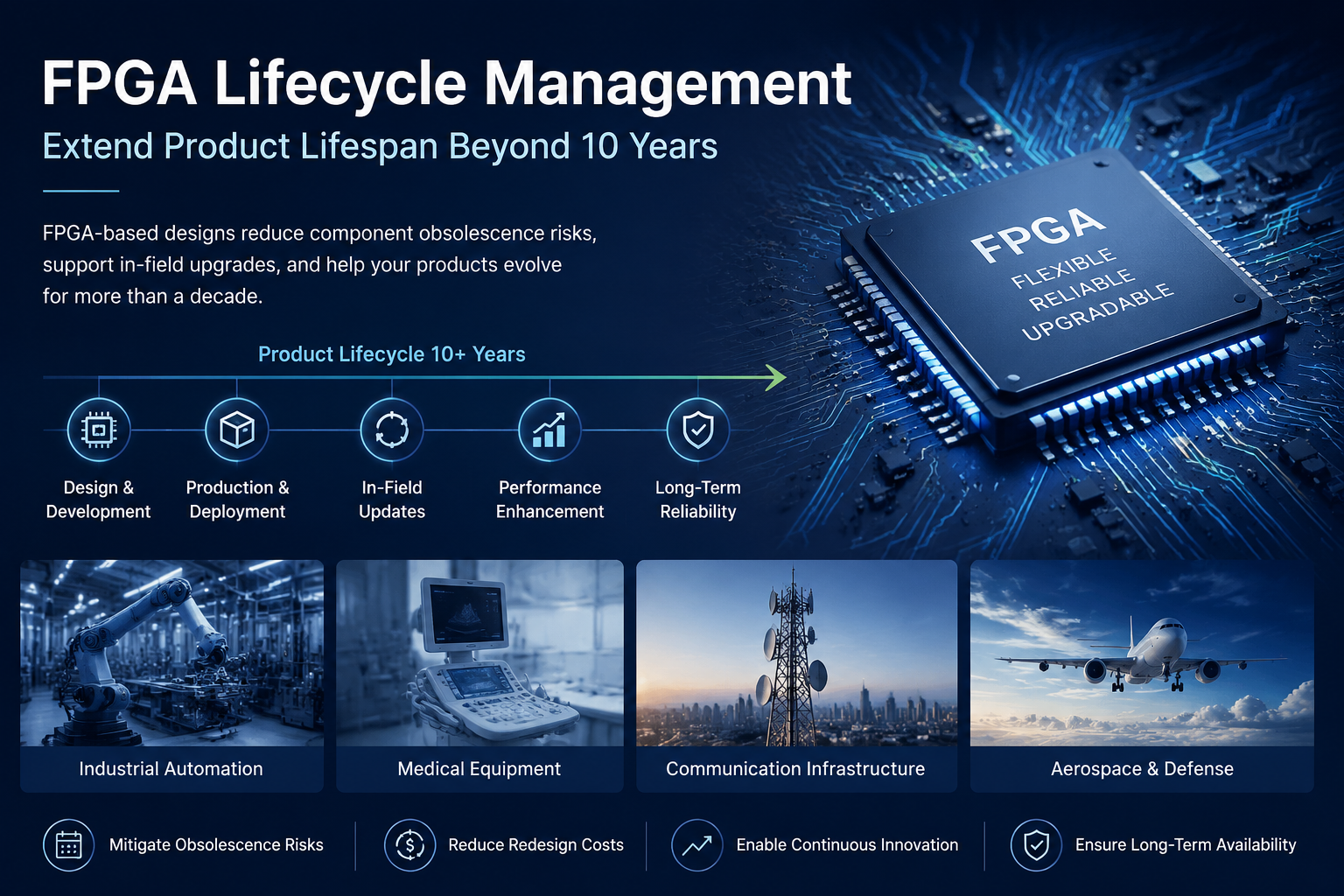
FPGA Lifecycle Management: How FPGA-Based Designs Extend Product Lifespan Beyond 10 Years
For industrial, medical, communication, and aerospace systems, product lifecycles often extend far beyond the typical lifespan of electronic components. While a device may need to operate reliably for 10 years or more, many semiconductor components face rapid technology changes, end-of-life (EOL) risks, and supply chain uncertainties. Through effective FPGA Lifecycle Management, companies can reduce component obsolescence risks, improve system flexibility, and extend the operational lifespan of long-term products. With programmable hardware architecture, long-term availability, and in-field upgrade capabilities, FPGA-based designs provide a sustainable solution for developing products that can evolve and remain competitive for more than a decade.

08/28/2026

View

Selected Manufacturers